Introduction
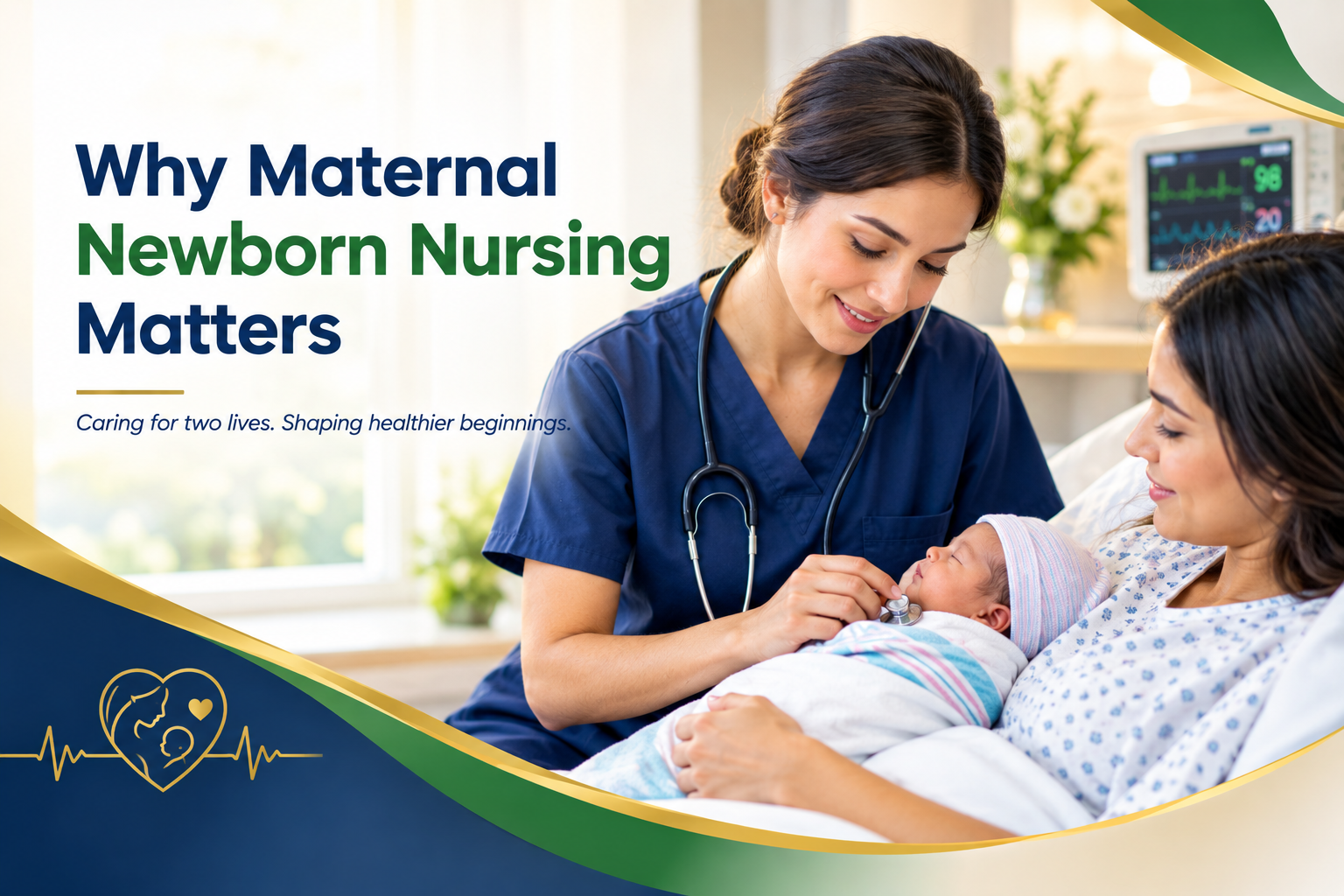
Maternal Newborn Nursing plays one of the most important roles in modern healthcare. Every pregnancy, birth, and newborn transition requires skilled nursing professionals who can provide safe, compassionate, and evidence-based care. These nurses support mothers before, during, and after childbirth while ensuring newborns receive the best possible start in life.
As healthcare continues to evolve, maternal newborn nursing has become increasingly important due to advances in medical technology, patient-centered care, and improved safety standards. From monitoring fetal health to educating new parents, maternal newborn nurses are essential members of every maternity care team.
Whether you are considering a nursing career, preparing for nursing school, or simply learning about maternity healthcare, understanding maternal newborn nursing provides valuable insight into one of the most rewarding nursing specialties.
Key Takeaways
- Maternal newborn nursing supports mothers from pregnancy through postpartum recovery.
- Nurses provide care for both mothers and newborns.
- Early assessment and intervention improve health outcomes.
- Strong communication and clinical judgment are essential.
- This specialty offers diverse career opportunities and high professional satisfaction.
- Continuous education helps nurses deliver safe, evidence-based care.
What Is Maternal Newborn Nursing?
Maternal Newborn Nursing is a specialized area of nursing focused on caring for women during pregnancy, labor, childbirth, postpartum recovery, and newborn care.
These nurses work alongside physicians, midwives, neonatal specialists, lactation consultants, and healthcare teams to ensure positive outcomes for both mother and baby.
Their responsibilities include:
- Monitoring maternal health
- Assessing fetal well-being
- Supporting labor and delivery
- Caring for newborn infants
- Educating parents
- Managing postpartum recovery
- Promoting breastfeeding
- Recognizing complications early
This specialty combines advanced clinical knowledge with emotional support, making it one of the most compassionate fields in healthcare.
Why Maternal Newborn Nursing Matters in Patient Care
Maternal newborn nurses directly influence the health of two patients simultaneously—the mother and the baby.
Their care helps:
- Reduce pregnancy complications
- Detect high-risk conditions early
- Improve delivery outcomes
- Promote healthy newborn development
- Lower infant mortality rates
- Support maternal mental health
- Improve breastfeeding success
- Educate families for safe home care
Every assessment, intervention, and patient education session contributes to healthier families and stronger communities.
Responsibilities of a Maternal Newborn Nurse
Maternal newborn nurses perform a wide range of clinical and educational responsibilities throughout the maternity journey.
Prenatal Care
During pregnancy, nurses:
- Monitor maternal vital signs
- Assess fetal movement
- Educate patients on nutrition
- Discuss prenatal testing
- Identify pregnancy risks
- Promote healthy lifestyle choices
Labor and Delivery
During childbirth, they:
- Monitor contractions
- Assess fetal heart rate
- Administer medications
- Manage pain relief
- Assist physicians
- Provide emotional support
- Respond to emergencies
Postpartum Care
After delivery, nurses:
- Monitor maternal recovery
- Assess bleeding
- Manage pain
- Encourage mobility
- Support breastfeeding
- Teach newborn care
Newborn Care
For newborns, nurses:
- Perform physical assessments
- Monitor temperature
- Observe feeding patterns
- Administer medications
- Conduct newborn screenings
- Educate parents about infant care
Essential Skills Every Maternal Newborn Nurse Needs
Success in maternal newborn nursing requires technical expertise and interpersonal skills.
Important skills include:
Critical Thinking
Quick clinical decisions can save lives during emergencies.
Communication
Clear communication builds trust between healthcare providers and families.
Compassion
Families often experience anxiety during childbirth. Compassion improves patient satisfaction and emotional well-being.
Assessment Skills
Early recognition of complications leads to faster treatment.
Time Management
Multiple patients often require simultaneous monitoring.
Patient Education
Teaching parents increases confidence and improves newborn care after discharge.
Importance Throughout Pregnancy, Birth, and Recovery
Maternal newborn nursing extends beyond the delivery room.
During Pregnancy
Nurses educate patients about:
- Healthy nutrition
- Exercise
- Prenatal vitamins
- Warning signs
- High-risk conditions
During Labor
Continuous monitoring allows early detection of fetal distress and maternal complications.
After Birth
Postpartum nurses monitor:
- Healing
- Infection prevention
- Emotional health
- Breastfeeding success
- Family bonding
This continuity of care improves long-term health outcomes.
Common Challenges in Maternal Newborn Nursing
Although rewarding, this specialty presents unique challenges.
Common challenges include:
- High-stress emergencies
- Emotional situations
- Long shifts
- Staffing shortages
- Complex patient needs
- Rapid clinical decision-making
- Caring for critically ill newborns
- Supporting grieving families
Strong teamwork and continuous education help nurses overcome these challenges.
How Technology Improves Maternal and Newborn Care
Healthcare technology has transformed maternal newborn nursing.
Examples include:
- Electronic Health Records (EHRs)
- Fetal monitoring systems
- Telehealth consultations
- Smart infusion pumps
- Newborn screening technologies
- Mobile patient education tools
Technology improves patient safety, communication, and clinical efficiency while supporting better outcomes.
Career Opportunities
Maternal newborn nurses can work in various healthcare settings.
Career options include:
- Hospitals
- Labor and delivery units
- Postpartum units
- Neonatal intensive care units (NICUs)
- Birthing centers
- Women’s health clinics
- Community health programs
- Home healthcare
- Nursing education
Many nurses pursue advanced certifications and leadership positions as they gain experience.
Education and Certification
The journey typically includes:
- Completing an accredited nursing program
- Passing the NCLEX-RN examination
- Gaining clinical maternity experience
- Earning specialty certifications
- Participating in continuing education
Lifelong learning ensures nurses remain current with evidence-based practices and evolving standards of care.
Tips for Nursing Students Interested in Maternal Newborn Nursing
Students can prepare for this specialty by:
- Building strong anatomy and physiology knowledge
- Practicing patient communication
- Studying fetal development
- Reviewing labor stages
- Learning newborn assessment techniques
- Participating in clinical rotations
- Strengthening critical thinking skills
- Preparing thoroughly for the NCLEX
Consistent study habits and hands-on experience build confidence and competence.
Conclusion
Maternal Newborn Nursing is much more than caring for mothers during childbirth. It is a specialty dedicated to protecting two lives at once while supporting families through one of life’s most significant milestones.
From prenatal education to postpartum recovery and newborn assessments, maternal newborn nurses provide expert care that improves patient safety, promotes healthy development, and enhances family well-being. Their knowledge, compassion, and clinical skills make them indispensable members of the healthcare team.
As the demand for qualified nurses continues to grow, maternal newborn nursing remains one of the most meaningful and impactful career paths in healthcare. For students pursuing nursing education, developing expertise in this specialty lays a strong foundation for compassionate, evidence-based patient care.
Call to Action
Ready to build a successful nursing career? At NEST Center, we help aspiring nurses strengthen their clinical knowledge, prepare for the NCLEX, and develop the confidence needed to excel in specialties like maternal newborn nursing. Explore our nursing education resources and training programs to take the next step toward achieving your professional goals.
Frequently Asked Questions
What is maternal newborn nursing?
Maternal newborn nursing is a nursing specialty focused on caring for mothers during pregnancy, childbirth, postpartum recovery, and caring for newborn infants.
What does a maternal newborn nurse do?
They monitor maternal and fetal health, assist during labor, provide postpartum care, educate families, and assess newborn health.
Why is maternal newborn nursing important?
It improves maternal and infant health outcomes by providing safe, evidence-based care and early recognition of complications.
Where do maternal newborn nurses work?
They commonly work in hospitals, maternity wards, labor and delivery units, NICUs, women’s health clinics, birthing centers, and community health organizations.
Is maternal newborn nursing a good career?
Yes. It offers meaningful patient relationships, career advancement opportunities, and growing demand in healthcare.
Reference reputable sources such as:
- American Nurses Association (ANA)
- American College of Obstetricians and Gynecologists (ACOG)
- World Health Organization (WHO)
- Centers for Disease Control and Prevention (CDC)
- Association of Women’s Health, Obstetric and Neonatal Nurses (AWHONN)
- National Council of State Boards of Nursing (NCSBN)
Why is Maternal Newborn Nursing one of the most important nursing specialties? Discover how these dedicated nurses improve outcomes for mothers and newborns through compassionate, evidence-based care. Learn about their responsibilities, essential skills, career opportunities, and why this specialty continues to shape the future of healthcare.
Maternal Newborn Nursing is a nursing specialty focused on caring for women during pregnancy, labor, childbirth, postpartum recovery, and newborn care. These nurses monitor maternal and infant health, provide education, support breastfeeding, recognize complications early, and improve patient outcomes. Their role is essential in delivering safe, family-centered, evidence-based care throughout the maternity journey.