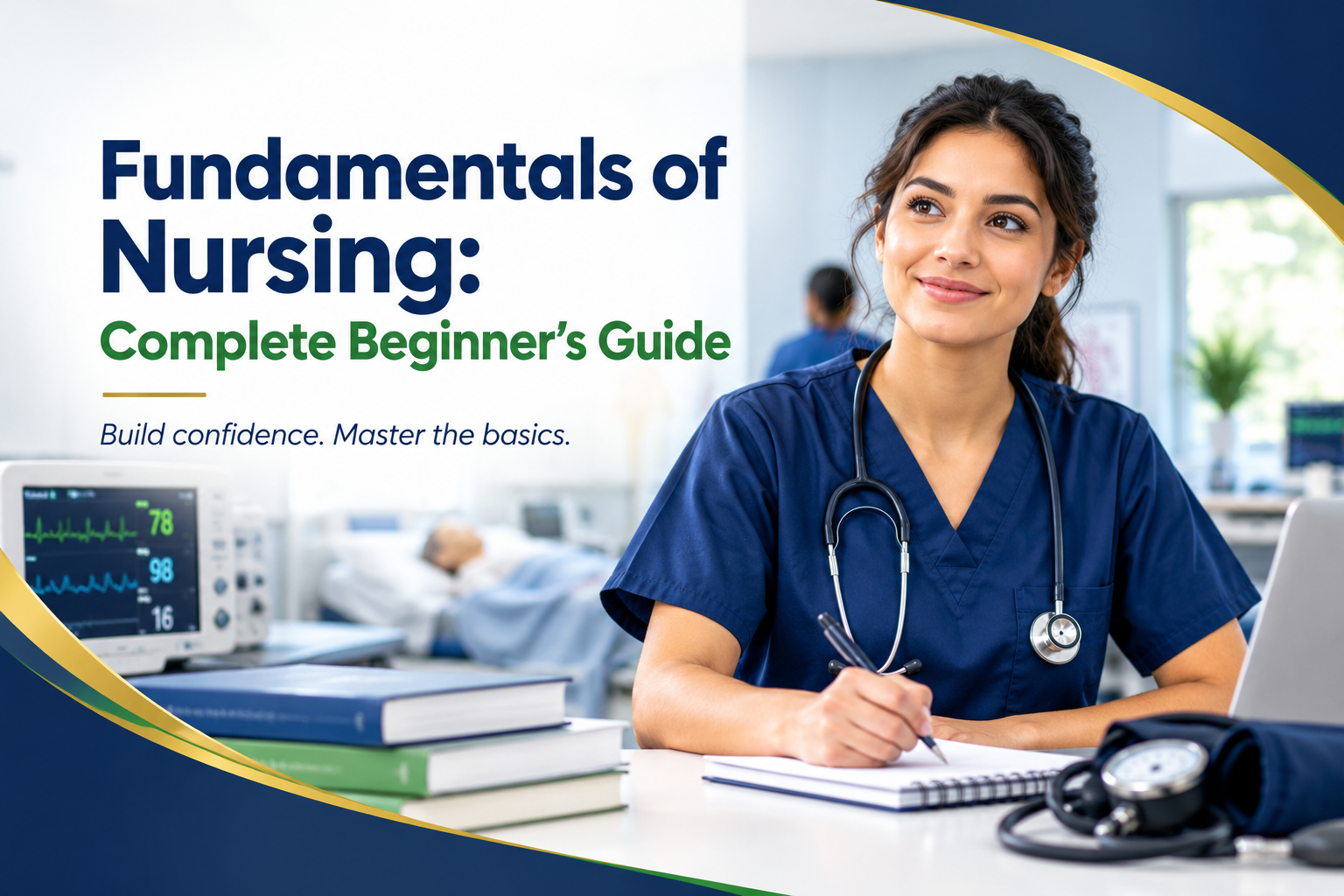
Entering nursing school is both exciting and challenging. Whether you’re beginning your educational journey or preparing for your first clinical experience, understanding the fundamentals of nursing is the foundation for becoming a competent, compassionate, and confident healthcare professional.
Every advanced nursing skill—from administering medications to caring for critically ill patients—builds upon these core principles. Learning the basics early not only improves academic performance but also prepares you to provide safe, ethical, and patient-centered care throughout your career.
In this comprehensive guide, you’ll discover the essential nursing concepts every beginner should know, the skills you’ll develop during your education, and practical strategies to help you succeed both in the classroom and in clinical settings.
What Are the Fundamentals of Nursing?
The fundamentals of nursing refer to the essential knowledge, clinical skills, values, and professional behaviors that every nurse must master before progressing to specialized areas of healthcare.
These fundamentals provide the framework for delivering safe, effective, and evidence-based patient care. They combine scientific knowledge with critical thinking, communication, ethical decision-making, and hands-on clinical practice.
Nursing fundamentals typically include:
- Patient assessment
- Vital signs monitoring
- Personal hygiene and comfort care
- Infection prevention
- Medication safety
- Patient communication
- Documentation
- Mobility assistance
- Nutrition and hydration
- Basic wound care
- Nursing ethics
- Clinical decision-making
Rather than focusing solely on medical procedures, nursing fundamentals emphasize caring for the whole person—addressing physical, emotional, psychological, cultural, and social needs.
Why Nursing Fundamentals Matter
Every successful nurse begins by mastering the basics.
Without a strong understanding of nursing fundamentals, it becomes difficult to make sound clinical judgments or provide high-quality patient care.
Learning these principles helps students:
- Build confidence during clinical rotations
- Reduce medical errors
- Improve patient safety
- Develop critical thinking skills
- Communicate effectively with healthcare teams
- Prepare for licensing examinations
- Deliver compassionate patient-centered care
These foundational skills remain relevant throughout a nurse’s career, regardless of specialization.
Whether you later work in pediatrics, emergency medicine, intensive care, or community health, you’ll continue relying on the principles learned during your first nursing courses.
Core Principles Every Nursing Student Should Learn
Patient-Centered Care
Modern healthcare places patients at the center of every clinical decision.
Patient-centered care means respecting each individual’s preferences, values, beliefs, and healthcare goals while involving them in treatment decisions.
Nurses should always:
- Listen actively
- Respect patient dignity
- Encourage shared decision-making
- Protect privacy
- Provide emotional support
Building trust often leads to better patient outcomes and increased satisfaction.
Evidence-Based Practice
Healthcare continues to evolve through ongoing research.
Rather than relying solely on tradition or personal experience, nurses use evidence-based practice to combine:
- Current scientific research
- Clinical expertise
- Patient preferences
This approach ensures patients receive safe and effective care supported by the latest medical evidence.
Critical Thinking
Nursing involves far more than following instructions.
Every shift presents unique situations requiring careful observation, clinical reasoning, and problem-solving.
Critical thinking enables nurses to:
- Recognize changes in patient conditions
- Prioritize care
- Interpret assessment findings
- Prevent complications
- Make informed decisions
Developing strong critical-thinking skills begins during the study of nursing fundamentals.
Holistic Care
Patients are more than their diagnoses.
Holistic nursing considers multiple aspects of well-being, including:
- Physical health
- Mental health
- Emotional needs
- Cultural background
- Spiritual beliefs
- Family support
- Lifestyle factors
By addressing the whole person, nurses can provide more meaningful and effective care.
Essential Nursing Skills for Beginners
During your nursing education, you’ll practice a wide variety of clinical skills that become second nature over time.
Patient Assessment
Assessment is the first step in providing quality care.
A comprehensive patient assessment includes:
- Health history
- Physical examination
- Pain assessment
- Mental status evaluation
- Mobility assessment
- Skin assessment
- Risk identification
Careful assessment helps nurses identify problems early and develop appropriate care plans.
Measuring Vital Signs
Vital signs provide valuable information about a patient’s overall health.
Nursing students learn how to accurately measure:
- Blood pressure
- Heart rate
- Respiratory rate
- Body temperature
- Oxygen saturation
- Pain level
Understanding normal ranges and recognizing abnormal findings are critical components of nursing practice.
Infection Prevention
Preventing infections is one of the most important responsibilities of every nurse.
Basic infection control practices include:
- Proper hand hygiene
- Personal protective equipment (PPE)
- Sterile techniques
- Isolation precautions
- Safe disposal of medical waste
- Environmental cleanliness
Consistently following infection prevention protocols protects patients, healthcare workers, and visitors.
Documentation
Accurate documentation is a legal and professional responsibility.
Every patient interaction should be documented clearly, objectively, and promptly.
Effective nursing documentation includes:
- Assessment findings
- Nursing interventions
- Patient responses
- Medication administration
- Communication with healthcare providers
- Education provided to patients
Clear documentation supports continuity of care and reduces the risk of medical errors.
Medication Safety
Medication administration requires careful attention to detail.
Nursing students are taught to follow established safety principles before administering any medication.
This includes verifying:
- The correct patient
- The correct medication
- The correct dose
- The correct route
- The correct time
- Proper documentation
Developing safe medication habits early is essential for protecting patients and maintaining professional accountability.
Assisting with Daily Living Activities
Many patients require assistance with routine activities due to illness, injury, or limited mobility.
Nurses help patients maintain dignity while supporting tasks such as:
- Bathing
- Dressing
- Grooming
- Eating
- Walking
- Positioning
- Toileting
Providing compassionate assistance improves patient comfort, promotes recovery, and helps prevent complications such as pressure injuries and falls.
The Nursing Process Explained
The nursing process is a systematic, patient-centered framework that guides nurses in delivering safe, effective, and individualized care. It consists of five essential steps commonly remembered by the acronym ADPIE.
1. Assessment
Assessment is the foundation of the nursing process. During this stage, nurses collect subjective and objective data about the patient’s health.
Examples include:
- Reviewing the patient’s medical history
- Measuring vital signs
- Conducting physical examinations
- Assessing pain levels
- Identifying emotional and psychological concerns
Accurate assessments allow nurses to recognize health problems early and make informed clinical decisions.
2. Diagnosis
After gathering information, nurses analyze the assessment findings to identify actual or potential health problems.
A nursing diagnosis differs from a medical diagnosis. Instead of identifying a disease, it focuses on the patient’s response to a health condition.
For example:
- Acute pain
- Risk for infection
- Impaired mobility
- Anxiety
- Ineffective airway clearance
These diagnoses help guide nursing interventions.
3. Planning
During the planning phase, nurses establish measurable, patient-centered goals and determine appropriate interventions.
An effective care plan should:
- Prioritize patient needs
- Include realistic goals
- Specify expected outcomes
- Outline evidence-based interventions
Planning ensures that every member of the healthcare team works toward common objectives.
4. Implementation
Implementation involves carrying out the nursing interventions outlined in the care plan.
These may include:
- Administering medications
- Monitoring patient status
- Assisting with mobility
- Providing health education
- Collaborating with physicians and therapists
- Supporting patients emotionally
Successful implementation requires excellent communication, organization, and clinical judgment.
5. Evaluation
Evaluation is the final step, where nurses determine whether the patient’s goals have been achieved.
Questions to consider include:
- Has the patient’s condition improved?
- Were the interventions effective?
- Are modifications needed?
Healthcare is dynamic, so the nursing process is continuous. Nurses often repeat these steps as patient needs change.
Patient Safety and Infection Prevention
Patient safety is a core responsibility of every nurse. Preventing avoidable harm requires attention to detail, adherence to clinical guidelines, and consistent communication among healthcare professionals.
Common patient safety practices include:
- Confirming patient identity before treatments or medications
- Performing hand hygiene before and after patient contact
- Using proper body mechanics to prevent injuries
- Monitoring for medication side effects
- Preventing falls through regular risk assessments
- Maintaining a clean and organized patient environment
- Reporting safety concerns promptly
Infection prevention is equally important. Following standard precautions, wearing appropriate personal protective equipment (PPE), and using aseptic techniques significantly reduce the spread of healthcare-associated infections.
Communication Skills in Nursing
Strong communication is one of the most valuable skills a nurse can develop.
Nurses interact with patients, families, physicians, therapists, pharmacists, and other healthcare professionals throughout every shift. Clear and compassionate communication improves teamwork, patient satisfaction, and clinical outcomes.
Effective communication includes:
- Active listening
- Asking open-ended questions
- Explaining procedures in simple language
- Demonstrating empathy
- Respecting cultural differences
- Maintaining patient confidentiality
- Documenting information accurately
Nonverbal communication also plays a significant role. Facial expressions, eye contact, posture, and tone of voice can influence how patients perceive their care.
Professional Ethics and Responsibilities
Nursing is built on trust, integrity, and accountability. Every nurse is expected to uphold ethical and legal standards while providing compassionate care.
Key ethical principles include:
Autonomy
Respect the patient’s right to make informed healthcare decisions.
Beneficence
Act in the patient’s best interest and promote well-being.
Nonmaleficence
Avoid causing harm and minimize potential risks whenever possible.
Justice
Provide fair and equitable care to every patient regardless of background, age, ethnicity, religion, or socioeconomic status.
Confidentiality
Protect patient privacy by safeguarding personal health information and following applicable privacy regulations.
Professional responsibility also involves maintaining competence through continuing education, following evidence-based practices, and collaborating respectfully with the healthcare team.
Common Challenges New Nursing Students Face
Learning the fundamentals of nursing can feel overwhelming at first. Many students encounter similar challenges during their education.
Some of the most common include:
- Managing a heavy academic workload
- Memorizing medical terminology
- Developing confidence during clinical rotations
- Balancing theory with practical skills
- Learning effective time management
- Coping with examination stress
- Adapting to fast-paced healthcare environments
These challenges are normal. With consistent practice, guidance from instructors, and effective study habits, students gradually become more confident and competent.
Tips to Master Nursing Fundamentals
Success in nursing requires more than memorization. Developing practical skills and clinical reasoning is equally important.
Here are some strategies to help you succeed:
Create a Study Schedule
Break complex topics into manageable sections and review them consistently rather than cramming before exams.
Practice Clinical Skills Regularly
Use simulation labs, skills checklists, and supervised practice to strengthen hands-on abilities.
Understand Concepts Instead of Memorizing
Focus on why procedures are performed and how different body systems work together.
Use NCLEX-Style Questions
Practice questions improve critical thinking and help identify areas that need additional review.
Join Study Groups
Collaborating with classmates encourages discussion, reinforces learning, and exposes you to different perspectives.
Seek Feedback
Ask instructors and clinical mentors for constructive feedback to improve your performance.
Prioritize Self-Care
Adequate sleep, balanced nutrition, hydration, and stress management support both academic success and overall well-being
Call to Action
Ready to build a strong foundation for your nursing career?
At Nest Center NEFL, we are committed to helping future healthcare professionals gain the knowledge, confidence, and practical skills needed for success. Whether you’re beginning your nursing journey or preparing for the NCLEX, our experienced instructors and student-focused programs provide the support you need every step of the way.
Explore our nursing education programs or contact our team today to take the next step toward a rewarding career in healthcare.
Final Thoughts
Mastering the fundamentals of nursing is the first and most important step toward a successful nursing career. These foundational principles shape how nurses think, communicate, assess patients, make clinical decisions, and deliver compassionate care.
As healthcare continues to evolve, the need for knowledgeable, ethical, and patient-centered nurses remains stronger than ever. By building a solid understanding of nursing fundamentals today, you’ll be better prepared for clinical practice, licensing exams, and lifelong professional growth.
Remember that becoming a skilled nurse is a journey. Every lecture, lab session, and clinical experience adds to your confidence and competence. Stay curious, practice consistently, and never stop learning.
Frequently Asked Questions
What are the fundamentals of nursing?
The fundamentals of nursing are the essential principles, knowledge, and clinical skills that form the foundation of safe and effective patient care. They include patient assessment, communication, infection control, documentation, medication safety, ethics, and the nursing process.
Why are nursing fundamentals important?
They help nurses provide high-quality, patient-centered care while reducing medical errors, improving safety, and supporting better health outcomes.
What is the nursing process?
The nursing process is a five-step framework consisting of Assessment, Diagnosis, Planning, Implementation, and Evaluation (ADPIE). It helps nurses deliver organized and individualized care.
What skills do beginner nursing students learn?
Students learn patient assessment, vital signs, infection prevention, communication, documentation, medication administration, basic wound care, mobility assistance, and professional ethics.
How can I study nursing fundamentals effectively?
Create a consistent study routine, practice clinical skills, use NCLEX-style questions, review concepts regularly, join study groups, and seek guidance from experienced instructors.